


Aged White Tea (12 Years) — ovanyu | 125g
$39.00
View
GOOD TEA. EVERY DAY.
Whole-leaf teas and considered objects. For the first cup of the day, and the small pauses that follow.
THE TEA COLLECTION
Floral, mellow, or quietly bright. A few good places to begin your daily tea ritual.

THE ART OF THE EVERYDAY
Warm the cup. Watch the leaves unfold. There is pleasure in these small details—and no single right way to make them your own.
Find your way to brew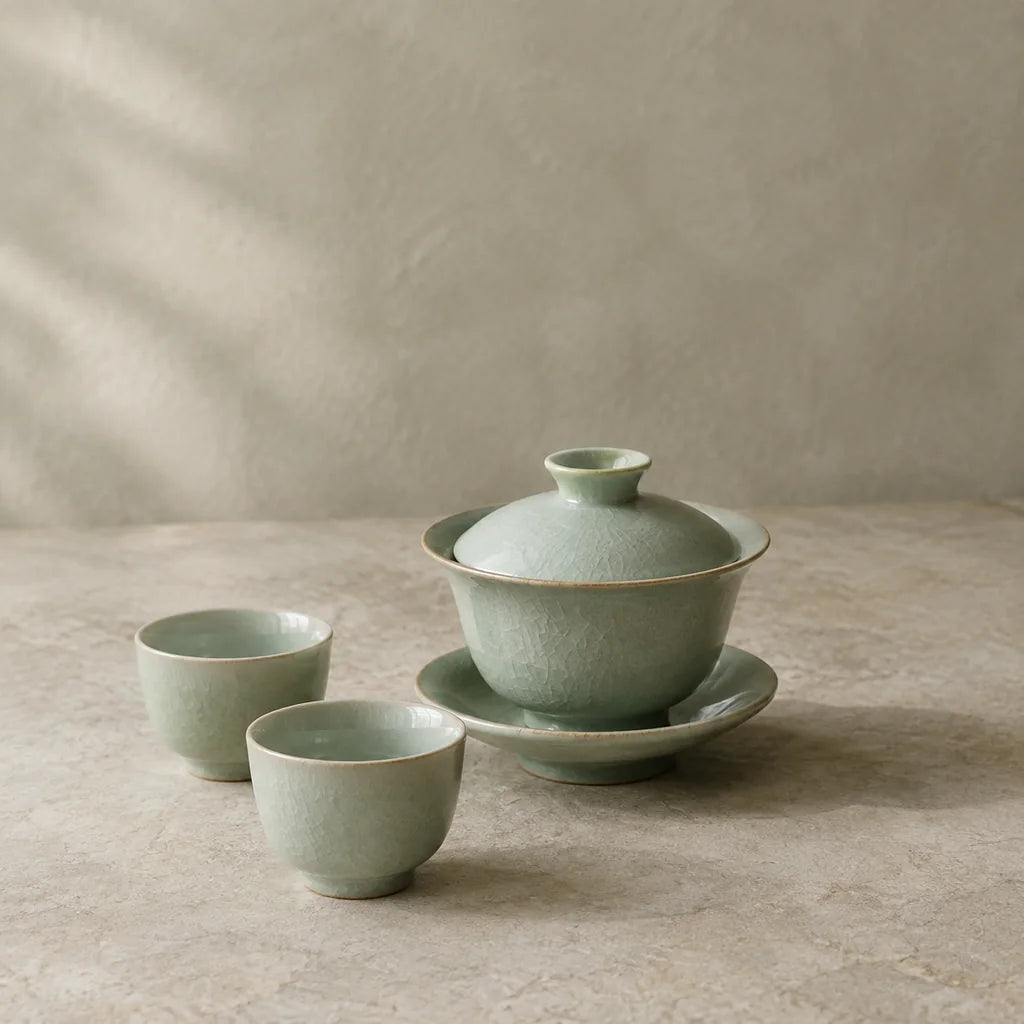
A bowl, a lid, a saucer. Simple objects that make an ordinary moment feel considered.
Explore teaware
Tea and a cup. A quiet gesture for someone you have in mind.
Find a giftIN THE MAKING
We are putting together a seasonal tea subscription. Leave your email to hear when the first selection is ready.
FROM THE COMMUNITY
Small moments, shared in their own words.
FROM THE JOURNAL

The simplest rituals often prove the most rewarding. A handful of leaves, hot water, a few minutes of attention—this is enough to transform an afternoon. Wh...
Read story
Time changes everything it touches. In the case of white tea, that change is transformation rather than decline. What begins as a bright, floral leaf becomes...
Read story
Spring arrives at a different pace in every tea garden. Follow the first leaves from new growth to the finished cup, and learn which details make an origin s...
Read storyOVANYU FIELD NOTES
Sixty notes on leaves, water, brewing, and the objects that make a tea ritual your own.
Brand notes by OVANYU


White tea
Begin with a modest measure of white tea and notice the space between aroma and sweetness. A pale cup can still have a rounded texture; color alone is not a measure of strength.
Gaiwans
Choose a gaiwan you can hold comfortably when filled. Practice the grip and lid angle with cool water before brewing hot tea, especially if the vessel is new to you.
Oolong tea
Oolong is a wide family. Floral, roasted and fruity impressions can appear in different combinations; the most useful tasting words are the ones that describe your own cup.
Yixing teapots
Consider a clay teapot’s capacity, handle and pouring angle alongside its appearance. The right pot should suit the amount of tea you actually make.
Green tea
For many green teas, water below boiling is a useful starting point. Follow the tea’s instructions and shorten the infusion if the first cup feels more astringent than you enjoy.
Jian ware
Turn a glazed cup gently in natural light and notice how its surface changes. Glaze effects can vary from piece to piece; refer to the product details for the specific finish.
Puerh tea
Raw and ripe puerh are different styles, not interchangeable brewing recipes. Read the description of your tea and approach its age, storage and processing as separate parts of its character.
Matcha
Sift matcha into a dry bowl before adding water. Breaking up clumps at the beginning helps create a more even cup without needing to press hard with the bamboo whisk.
Fairness cups
Pour the complete infusion into a serving pitcher before filling individual cups. This helps everyone share a similar strength of tea from the same brew.
Black tea
Black tea can suggest malt, fruit, flowers or cocoa, depending on the leaf and processing. Taste without additions first so you can decide how you prefer to enjoy it.
Tea trays
A tea tray brings the brewing objects together and catches incidental water. Check whether its design drains to a reservoir or needs wiping between sessions.
Jasmine tea
With jasmine tea, notice both the floral fragrance and the tea that carries it. Try a slightly cooler sip to see how the aroma and the leaf’s own character come together.
Tea rituals
Use fresh drinking water without a strong smell. Different mineral content can change the cup; when comparing teas, keep your water consistent so the leaf has room to speak.
Tea cups
Notice how a cup’s rim meets your mouth and how comfortably the shape sits in your hand. Small differences in shape can change the pace of drinking.
White tea
Give broad white-tea leaves room to open. A roomy infuser or gaiwan makes it easier to watch the leaf change and to pour the finished infusion away from the leaves.
Matcha teaware
Rinse a bamboo whisk gently after use and allow it to air-dry. Avoid pressing the delicate tines flat; check the maker’s recommendations for storage and replacement.
Oolong tea
Rolled oolong expands as it steeps. Leave space in the gaiwan so water can move around the leaves, and pour each infusion completely before beginning the next.
Teaware sets
Count the cups you will regularly need and compare their capacities with the pot. A compact, well-matched set can be more useful than a large collection of unused pieces.
Green tea
Green tea can suggest fresh grass, vegetables, sea air or toasted nuts. These are tasting associations, not added ingredients; compare aroma and flavor rather than searching for one correct answer.
Puerh tea
Work carefully from the edge of a compressed tea with a suitable tea pick. Keep your supporting hand out of its path and aim for small, loose pieces rather than finely crushed leaf.
Ceramic care
Open ceramic parcels on a clear, stable surface and keep the packaging until you have inspected each piece. If anything arrives damaged, photograph it and contact us with your order details.
Matcha
Use quick, light back-and-forth strokes, keeping the whisk tips away from heavy pressure against the bowl. A fine foam is pleasing, but the texture you enjoy is the real goal.
Tea accessories
A scoop, a strainer or cup tongs should make your routine easier. Begin with what you need for your chosen brewing method and add objects as your practice develops.
Black tea
For a longer shared cup, use a spacious infuser and enough water for everyone. Remove the leaves or decant the tea when it reaches the strength you like.
Jasmine tea
Tightly rolled jasmine pearls need room to unfurl. Use the suggested leaf amount and compare successive infusions rather than filling the vessel with dry pearls.
Gaiwans
Avoid filling a gaiwan to its rim. A little space above the water gives your fingers more room and makes a controlled pour easier to learn.
Tea rituals
Write down the leaf amount, water temperature and infusion time, then add one phrase about the taste. A short note is enough to help you return to a cup you enjoyed.
Yixing teapots
Unglazed clay and glazed ceramics need different care. Follow the maker’s instructions; avoid strong detergents and scents on porous tea clay.
White tea
Return to the same leaves with fresh water. Compare the second cup with the first: the fragrance may soften while sweetness or body becomes easier to notice.
Jian ware
Consider the cup’s weight and rim as well as its pattern. A cup you use every day should feel comfortable to lift, hold and return to the table.
Oolong tea
Use short infusions to explore an oolong in stages. Notice how the aroma, texture and finish shift; extend the steep gradually when the flavor begins to fade.
Green tea
Pour a little green tea into a light-colored cup and look at it in natural light. Yellow, green and golden tones vary with the leaf and brewing method.
Fairness cups
Choose a pitcher that comfortably holds your brewing vessel’s usable volume. Extra headroom helps when decanting quickly and keeps the tea table calmer.
Puerh tea
With puerh, notice the weight of the tea in the mouth as well as its aroma. A cup may feel light, rounded or drying; your preferred balance matters more than elaborate tasting language.
Tea trays
Empty standing water and dry a wooden tea tray after use. Keep it away from prolonged soaking or direct heat, and follow the maker’s care guidance for its finish.
Matcha
Follow the recommended matcha-to-water ratio as a starting point. Add a little water if the cup feels too concentrated, and taste it plain before deciding whether to add milk.
Black tea
A transparent serving pitcher makes it easy to observe the liquor, from warm gold to deep red-brown. Compare appearance with flavor without assuming that darker always means better.
Tea cups
A small tasting cup invites a few sips at a time. It can be useful for comparing infusions, while a larger mug may suit a longer, less interrupted moment.
White tea
Taste white tea before adding anything. Look for the difference between a sweet aroma and sweetness on the tongue, then let the cup cool a little and taste again.
Matcha teaware
A matcha bowl should leave enough space for light whisking strokes. Consider the interior shape and stability alongside its color and glaze.
Oolong tea
Roasting and oxidation shape tea in different ways. A dark-looking leaf does not tell the whole story, so use the maker’s brewing guidance and let the cup lead your adjustments.
Gaiwans
A small gap between bowl and lid lets the tea flow while holding back larger leaves. Adjust gradually; leaf size and vessel shape both affect the pour.
Green tea
Keep your everyday tea sealed between sessions and measure only what you need. Moisture, heat and strong odors can interfere with the fresh character you are trying to preserve.
Puerh tea
Decant the brewing vessel fully between infusions. Leaving tea around the leaves continues the extraction and makes the next cup harder to compare with the one before.
Yixing teapots
Before first use, check the maker’s cleaning guidance and rinse as directed. Avoid improvised treatments with oils or scented products that could affect future cups.
Matcha
Close matcha promptly after measuring. Follow its storage instructions, limit contact with heat and moisture, and let a chilled sealed container warm before opening to reduce condensation.
Jian ware
Avoid sudden temperature changes in ceramic cups. Warm them gently and follow their care instructions, especially when moving between a cool room and freshly heated water.
White tea
Store white tea away from kitchen steam, direct sun and strong scents. Use the storage guidance for your particular tea, especially if it is intended for aging.
Oolong tea
Warm an empty brewing vessel, drain it, then add the dry leaves. Lift the lid carefully and notice the fragrance before the first infusion; this small pause is part of the ritual.
Fairness cups
A controlled stream depends on the pitcher’s shape and your pouring angle. Try a small amount of cool water first, then adjust your grip and pace.
Green tea
Let the cup cool until it is comfortable to sip. Texture and gentle sweetness can become easier to separate from the first rush of warm aroma.
Tea trays
Arrange the vessel, pitcher and cups with space between them. An uncluttered tray makes it easier to move hot water without reaching across other objects.
Puerh tea
Keep puerh away from strong odors and uncontrolled moisture. Storage needs depend on the tea and your climate; avoid treating a humid cupboard as a shortcut to careful aging.
Gaiwans
An open gaiwan lets you observe the leaves between infusions. Notice how their shape and color change, then replace the lid when you are ready for the next pour.
Matcha
Choose a bowl with enough room for the whisk to move. Warm it first, empty it, then prepare the matcha; a stable bowl makes the small movements feel more comfortable.
Oolong tea
Start with the guidance supplied with your tea. Many oolongs welcome hot water, while delicate styles may benefit from a gentler approach; change one variable at a time.
Yixing teapots
Practice with cool water to learn the weight of a filled teapot. Support the lid as appropriate for the design and keep the spout directed safely into the serving vessel.
Green tea
If a green tea feels too sharp, try a shorter infusion before changing the leaf amount and water temperature together. One small change makes the next cup easier to understand.
Gaiwans
Compare the stated capacity with the cups you use. A small gaiwan can be enough for several tasting cups, while a larger one may suit a shared session.
Oolong tea
After a sip, pause before the next. Notice whether the finish feels floral, toasted, drying or sweet. A few quiet seconds can reveal details that disappear when you hurry.
Swipe to explore this page of notes.
OVANYU FAVORITES
A few things worth slowing down for.
 Sold out
White Tea
The 2026 Spring Harvest — White Peony, Fresh and FloralBai Mu Dan from this spring’s harvest: two buds...

White Tea
Twelve Years of Stillness — Fuding’s Deepest White TeaTwelve years of patient aging bring chen xiang — the...

White Tea
Nine Years in Fuding — Warm, Deep, and RestfulNine years of quiet aging give this white tea the...

White Tea
Eleven Years of Time — A Long-Aged Fuding ReserveEleven years have given this white tea honey, red date,...

Black Tea
The Fullest Smile — Feizixiao Where the Lychee Speaks Feizixiao — "Flying Concubine's Smile" — is a Wuyi...

Black Tea
Light as a Name, Deep as a Mountain — Wuyi Feizixiao Within the tradition of Wuyi Mountain black...

Black Tea
Three Aromas, One Bud — Jin Jun Mei at Its Most Complete Jin Jun Mei — "Golden Beautiful...

Black Tea
Ten Thousand Buds, One Cup — The Pinnacle of Chinese Black Tea Jin Jun Mei — "Golden Beautiful...

Black Tea
The Most Fragrant Bud — Jin Jun Mei Reimagined Through the Meizhan Cultivar Jin Jun Mei is defined...

Black Tea
Black Tea, Bright and Floral — Zhengshan Xiaozhong at Its Most Luminous Zhengshan Xiaozhong — the original black...

Black Tea
The Original Black Tea — From the Mountain Where It All Began Every black tea in the world...

Black Tea
The Deepest Root — Ancient-Tree Dianhong at Its Most Concentrated There is a point in the spectrum of...

Black Tea
Centuries of Root — What Ancient Trees Give That Young Ones Cannot In the subtropical highlands of Fengqing...

Black Tea
The Complete Spiral — Dianhong Where Every Layer Is Present Yunnan large-leaf black tea at its finest is...

Black Tea
Gold From the Ancient Forest — Yunnan's Most Celebrated Black Tea In the subtropical highlands of Fengqing County,...

Oolong Tea
The Name Is a Joke. The Tea Is Not. Ya Shi Xiang — "Duck Shit Aroma" — is...

Oolong Tea
The Most Misleading Name in Tea. The Most Unforgettable Aroma. Let's address it immediately: Ya Shi Xiang —...

Oolong Tea
The Fullest Expression of Honey and Orchid — Mi Lan Xiang at Its Most Complete There is a...

Oolong Tea
One Tree, One Tea — Fenghuang's Most Beloved Aroma High in the mist-covered peaks of the Fenghuang Mountains...

Teaware
An Ancient Art, Made for the Modern Tea TableThe ovanyu Lacquer Tea Tray draws on one of China's...

Teaware
Form Follows FlowThe ovanyu Crescent-shaped Glass Fairness Pitcher reimagines a tea table essential with an elegant, curved silhouette...

Teaware
A Small Tool with a Distinct PresenceThe ovanyu Ebony Tea Tray Scraper is one of those quietly essential...

Teaware
Blue Bamboo Against a Muted Ash-Toned GlazeThe ovanyu Bamboo Gaiwan combines hand-painted blue decoration with a muted soda-ash...

Teaware
Blue Bamboo on a Compact 100 ml GaiwanHand-painted bamboo gives this ovanyu gaiwan a familiar blue-and-white character at...

Teaware
Lemon Yellow, Drawn into a Three-Part FormThe ovanyu Lemon Yellow Gaiwan brings a clear color glaze and hand-painted...

Teaware
Soft Pink Clay with a Sculpted FlowerA hand-formed flower turns the lid of this ovanyu pink clay gaiwan...

Teaware
Pale Glaze with Silver-Wire LineworkLotus Pond and Ruyi decoration bring two different expressions to this ovanyu Ru-style ceramic...

Teaware
A Geometric Pattern Around a 160 ml GaiwanBlue tortoiseshell-pattern decoration brings a geometric character to the pale surface...

Teaware
A Softer Red for the Everyday Tea TableMuted bean red brings warmth to this ovanyu ceramic gaiwan, while...

Teaware
Six Colors, One Rounded Brewing FormThe ovanyu Thin-Walled Gaiwan collection lets color set the mood of a tea...

Teaware
See Every Shade of Your BrewThe ovanyu Glass Fairness Pitcher is crafted from high-borosilicate glass, bringing quiet elegance...

Green Tea
Most green teas are defined by their flavor alone. Golden Bud No. 08 announces itself before the first...

Green Tea
Golden Bud No. 06 begins with the leaf. Set a few grams into a clear glass and the...

Green Tea
To understand what No. 06 is, start with what it demands of the garden: only the days when...

Green Tea
The leaves of Sparrow's Tongue No. 08 are selected before they open. At the moment the garden reaches...

Green Tea
Sparrow's Tongue — Que She — is named for the shape of its leaf: a small, flat, two-leaf-and-bud...

Green Tea
At the apex of the Biluochun spectrum sits No. 4 — a grade reserved for gardens where traditional...

Green Tea
Along the western shores of Lake Taihu, in the hills of Jiangsu Province, Biluochun has been cultivated for...

Green Tea
Biluochun is one of China's most storied green teas — grown for centuries along the shores of Lake...

Green Tea
At elevations above 1,200 meters, where morning clouds soften the sunlight and cool mists roll through the canopy,...

Green Tea
Maofeng No. 3 is where the mountain fully expresses itself. At the elevation and picking standard this grade...

Green Tea
At a higher elevation and with a more selective picking standard than No. 7, Maofeng No. 5 earns...

Green Tea
Huangshan — Yellow Mountain — is one of China's most celebrated landscapes: granite peaks rising through cloud, streams...

Green Tea
West Lake Longjing is defined by one thing above all else: the fragrance that rises from a hot...

Green Tea
There is a moment in the production of West Lake Longjing that cannot be automated: the instant a...

Teaware
Matcha has a method. This set is built around it. Designed in a Japanese aesthetic with hand-painted spring...

Loose Leaf Tea
Where Morning Mist Meets Jasmine BlossomIn Hengxian County, Guangxi — China's most celebrated jasmine-growing region, where the climate...

Loose Leaf Tea
Two Forms. Three Flowers. One Uncommonly Rich Aroma.From Hengxian County, Guangxi — the jasmine heartland of China —...

Loose Leaf Tea
A Single Golden Bud. A Thousand Layers of Jasmine.In Hengxian County, Guangxi — the jasmine capital of China,...

Loose Leaf Tea
The Pearl That Holds the Whole Garden.In Heng County (Hengxian), Guangxi — where the world’s most prized jasmine...

Green Tea
Longjing — Dragon Well — is China's most celebrated green tea, and its reputation rests on a single...
Tea
A new tea, chosen by OVANYU and delivered every month. Each shipment features one seasonal or newly arrived...

Teaware
Precision in the Palm of Your HandThe ovanyu Pure Titanium Tea Scoop pairs a pure titanium scoop head...

Teaware
The Detail That Keeps Everything in Order.The ovanyu Absorbent Tea Cloth is a thickened cotton-linen blend cloth designed...

Teaware
Blue and White, Raised above the TableA shallow porcelain dish on a pedestal foot offers a small place...

Teaware
A Panda with a Pose of Its OwnChoose a seated or resting panda, then select bright or swirl...

Teaware
A Tang-Inspired Horse in Three GlazesA rounded body, lifted legs, and flowing mane give this ovanyu ceramic horse...

Teaware
Two Sides. Six Patterns. One Considered Tea Table.The ovanyu Double-Sided Brocade Tea Mat is a dry-brewing mat woven...

Teaware
One Tool. Two Edges. Built to Last.The ovanyu Dual-End Tea Knife & Needle is designed for anyone who...

Teaware
A Cup Coaster That Earns a Second Look.The ovanyu Ebony Cup Coaster Set rethinks a functional tea table...

