
![[DRAFT] The Everyday Gaiwan](http://ovanyu.com/cdn/shop/files/teaware.webp?v=1790077746&width=750)
[DRAFT] The Everyday Gaiwan
From $42.00
View

Black Tea
Every black tea in the world traces its lineage to one place: the Wuyi Mountains of Fujian Province, China, where Zhengshan Xiaozhong — Lapsang Souchong — was first produced in the 17th century. This is not a category. It is an origin. And within that origin, there are expressions that have been refined across generations into something that bears almost no resemblance to the smoky, heavily processed versions that first traveled to European markets centuries ago.
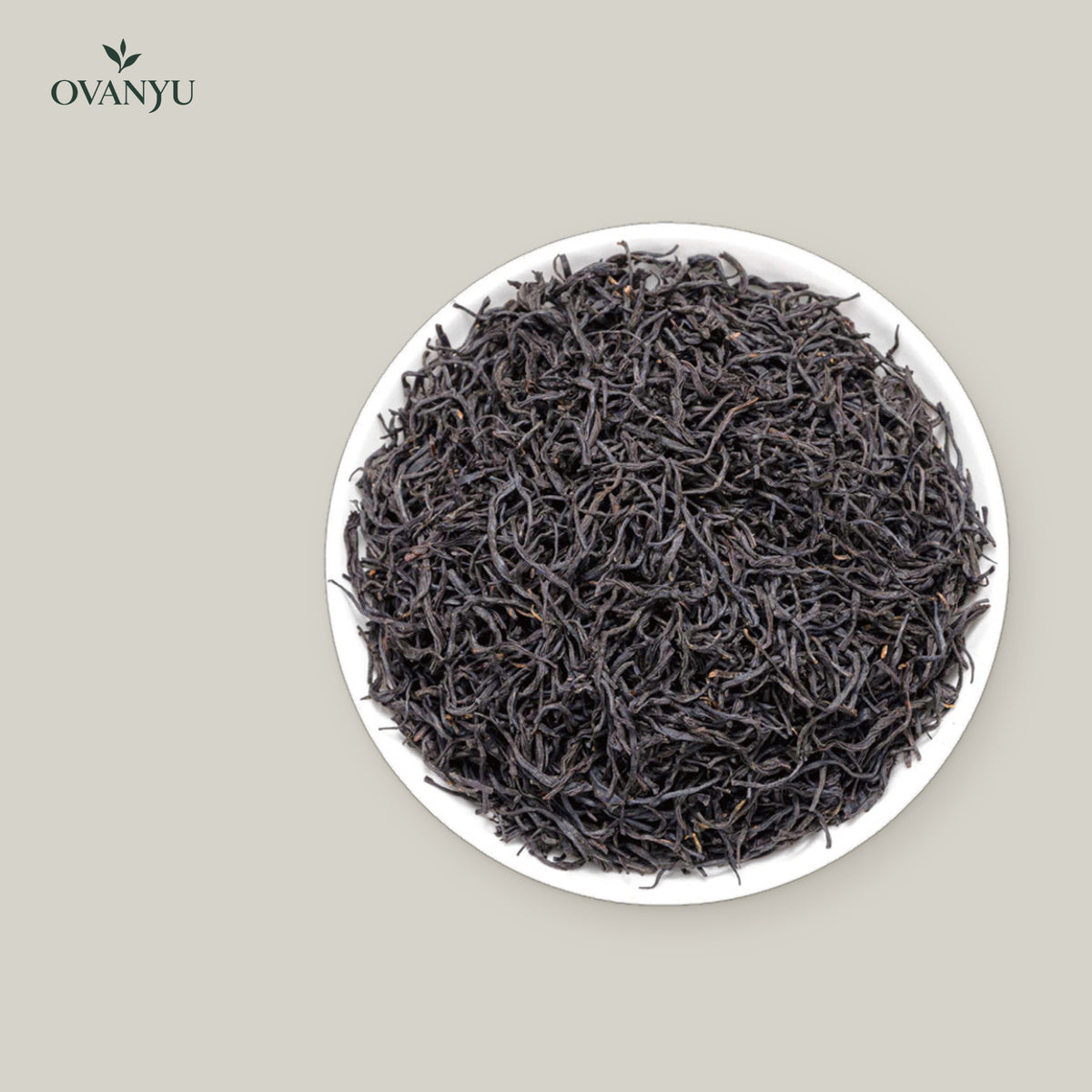
ovanyu's Zhengshan Xiaozhong No. 6 is one of those expressions: a high-grade, pine-smoke-free interpretation of this historic tea, sourced from the Tongmu Reserve in the core Wuyi Mountain region — where protected old-growth forest, altitude, and cool mountain humidity create conditions for a black tea of exceptional natural sweetness and aromatic complexity. The honey fragrance is immediate and generous. The floral note is present and refined. The body is full, smooth, and long. This is where black tea begins — at its most complete.
Origin: Tongmu Reserve, Wuyi Mountains, Fujian Province, China
Type: Zhengshan Xiaozhong (Lapsang Souchong) — Non-Smoked, High Grade
Net Weight: 150g (5.29 oz)
Processing: Withering, rolling, full oxidation, drying — traditional Zhengshan Xiaozhong process, no pine smoking
Ingredients: 100% single-origin Tongmu Wuyi Mountain black tea leaves
Hot Brew (Gongfu Style — Recommended)
Leaves: 5–6g | Water: 150–200ml | Temperature: 205–212°F (96–100°C)
First infusion: 15–20 seconds. Add 15 seconds each round. Yields 5–8 infusions. Gongfu brewing allows the honey and floral character to express across multiple rounds — the honey sweetness leads in the early steeps; the floral note becomes more distinct in the middle rounds; the hui gan sweetness is most sustained toward the end. Use near-boiling water throughout.
Hot Brew (Western Style)
Leaves: 3–4g | Water: 12 oz (350ml) | Temperature: 205–212°F (96–100°C)
Steep 3–4 minutes. The honey sweetness and full body of No. 6 come through immediately in a Western format — rich, satisfying, and completely accessible without Gongfu equipment. Re-steep once or twice with an additional 30 seconds each time. Also excellent with a splash of whole milk, which amplifies the honey character without obscuring the floral note.
Cold Brew
Leaves: 6–8g | Water: 600ml cold water
Refrigerate 10–14 hours. Cold extraction produces a naturally sweet, smooth brew in which the honey fragrance is the dominant note and the floral accent comes through with exceptional clarity. One of the most effortlessly enjoyable cold brews in the ovanyu range. Serve at room temperature or over ice.
Q: What is Zhengshan Xiaozhong, and how is it different from Lapsang Souchong?
A: Zhengshan Xiaozhong and Lapsang Souchong refer to the same tea — the former is the Chinese name, the latter the Anglicized term that entered the Western market. However, what most Western consumers know as Lapsang Souchong is a heavily pine-smoked, lower-grade version of the tea that was developed for export markets. Authentic, high-grade Zhengshan Xiaozhong — like No. 6, sourced from the Tongmu Reserve — is typically non-smoked, and tastes nothing like the smoked version: it is characterized by natural honey sweetness, a refined floral note, and a full, smooth body. If you have only encountered smoked Lapsang Souchong, No. 6 will be a complete revelation.
Q: Is this tea smoked?
A: No. No. 6 is a non-smoked expression of Zhengshan Xiaozhong. The pine-smoke character associated with export-grade Lapsang Souchong is entirely absent. What you will taste is the natural character of the Tongmu leaf: honey, floral notes, a full body, and a long returning sweetness — with nothing added and nothing obscured.
Q: How does Zhengshan Xiaozhong compare to other Chinese black teas?
A: Zhengshan Xiaozhong is the original Chinese black tea — the category from which Keemun, Yunnan Dian Hong, and all other Chinese black teas ultimately descend. Within the black tea spectrum, No. 6 sits at the honey-forward, full-bodied end: richer than Keemun, warmer and less malty than Dian Hong, and with a specific floral note that is unique to the Tongmu terroir. It is the black tea for those who want depth and sweetness without smoke or bitterness.
Q: Can I add milk?
A: Yes. While No. 6 is exceptional on its own, whole milk amplifies the honey character and creates a warm, naturally sweet cup that requires no sugar. A small amount of high-quality milk is all that is needed — enough to complement the tea without obscuring the floral note.
Q: Is this suitable as a gift?
A: Zhengshan Xiaozhong is the origin of all black tea — a gift with genuine historical depth and immediate sensory impact. No. 6, as a high-grade non-smoked expression from the Tongmu Reserve, is both exceptional in quality and accessible in character: appropriate for serious tea drinkers and for those being introduced to Chinese black tea for the first time. ovanyu's packaging is designed with a refined aesthetic appropriate for meaningful personal and professional gifting.
Shipping calculated at checkout.
Sample brewing guide: use 3 g of whole-leaf tea with 250 ml of water at 90°C. Infuse for 2–3 minutes, then try a second infusion. Adjust to taste. Replace these example instructions with the final product guidance.
Available delivery options and shipping charges are shown at checkout. For questions about your destination, please contact us before ordering.
Please contact us with your order details for help with a return. The store return policy applies.
A PLACE IN THE DAY
The Original Black Tea — From the Mountain Where It All Began Every black tea in the world traces its lineage to one place: the Wuyi Mountains of Fujian Province, China, where Zhengshan Xiaozhong — Lapsang Souchong — was first ...
See how to brew ↗EXPLORE THE COLLECTION