
![[DRAFT] The Everyday Gaiwan](http://ovanyu.com/cdn/shop/files/teaware.webp?v=1790077746&width=750)
[DRAFT] The Everyday Gaiwan
From $42.00
View

Black Tea
Zhengshan Xiaozhong — the original black tea, born in the Wuyi Mountains of Fujian Province in the 17th century — is a category with more range than most tea drinkers realize. At one end: rich, honey-forward expressions of considerable weight and depth. At the other: bright, floral expressions in which the lightness of the Tongmu leaf comes fully to the foreground — vivid, refreshing, and with a clarity that feels more like the finest oolong than the black tea most people know.
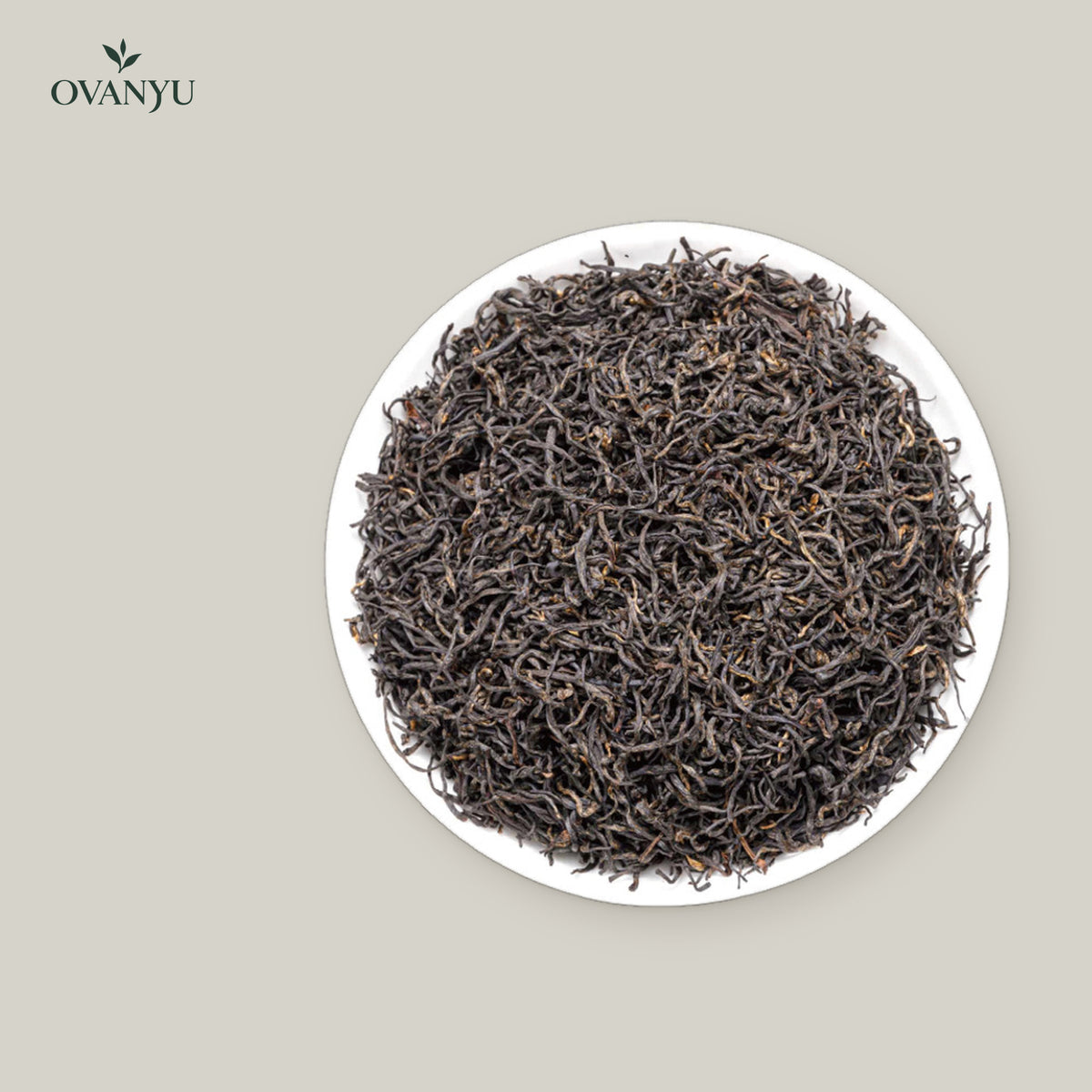
ovanyu's Zhengshan Xiaozhong No. 4 is that expression. Sourced from the Tongmu Reserve in the protected core of the Wuyi Mountain region — where old-growth forest, altitude, and cool mountain humidity create conditions for natural aromatic intensity — No. 4 is a lighter-grade expression of this historic tea: the floral character is vivid and clearly present, the body is clean and refreshing, and the returning sweetness is long without being heavy. This is Zhengshan Xiaozhong for those who want brightness above all.
Origin: Tongmu Reserve, Wuyi Mountains, Fujian Province, China
Type: Zhengshan Xiaozhong (Lapsang Souchong) — Non-Smoked, Floral Expression
Net Weight: 150g (5.29 oz)
Processing: Withering, rolling, full oxidation, drying — traditional Zhengshan Xiaozhong process, no pine smoking
Ingredients: 100% single-origin Tongmu Wuyi Mountain black tea leaves
Hot Brew (Gongfu Style — Recommended)
Leaves: 5–6g | Water: 150–200ml | Temperature: 200–205°F (93–96°C)
First infusion: 15–20 seconds. Add 15 seconds each round. Yields 5–7 infusions. A slightly lower temperature than No. 6 preserves the bright floral character and refreshing clarity at their most vivid. The floral fragrance peaks in the first two steeps; the clean sweetness and returning hui gan become more prominent from the third infusion onward.
Hot Brew (Western Style)
Leaves: 3g | Water: 12 oz (350ml) | Temperature: 200–205°F (93–96°C)
Steep 2–3 minutes. The brightness and floral clarity of No. 4 come through immediately in a Western format — clean, fragrant, and effortlessly enjoyable. Re-steep once with an additional 30 seconds. Excellent as a standalone tea; the lighter body also makes it one of the best in the ovanyu range served over ice.
Cold Brew
Leaves: 6–8g | Water: 600ml cold water
Refrigerate 10–14 hours. Cold extraction foregrounds the floral note and natural sweetness with exceptional clarity — producing a bright, clean, naturally sweet brew that is among the most refreshing in the ovanyu range. Serve at room temperature or over ice.
Q: How does No. 4 differ from No. 6 in the ovanyu Zhengshan Xiaozhong range?
A: The two expressions have different aromatic priorities. No. 6 is honey-forward: rich, full-bodied, and deeply sweet, with a floral note woven through a dominant honey character. No. 4 leads with the floral note: brighter, cleaner, and more refreshing, with the honey sweetness present as a background quality rather than the defining one. No. 6 is Zhengshan Xiaozhong at its most complete and layered; No. 4 is Zhengshan Xiaozhong at its most vivid and immediately pleasurable. For those new to the category, No. 4 is the natural starting point.
Q: Is this the same as Lapsang Souchong?
A: Zhengshan Xiaozhong and Lapsang Souchong are the same tea by different names — but No. 4 tastes nothing like what most people know as Lapsang Souchong. Standard Lapsang Souchong in the Western market is a heavily pine-smoked, lower-grade version produced for export. No. 4 is a non-smoked, high-grade Tongmu Reserve expression: naturally floral, clean, and refreshing. If you have only encountered the smoked version, No. 4 will be a complete surprise.
Q: Is this suitable for someone new to Chinese black tea?
A: No. 4 is an ideal entry point — perhaps the most approachable in the ovanyu black tea range. The floral brightness and clean body make it immediately enjoyable without requiring familiarity with the category, and the non-smoked profile removes the most common barrier for those who have encountered and disliked standard Lapsang Souchong. It is the Zhengshan Xiaozhong to start with.
Q: Can I add milk?
A: Yes, though the lighter, floral character of No. 4 is best appreciated without milk on the first encounter. A small amount of whole milk works well if desired and adds a gentle creaminess without obscuring the floral note. Over ice with a splash of cold milk is also excellent.
Q: Is this suitable as a gift?
A: No. 4 is an excellent gift for those new to specialty Chinese tea — approachable, immediately pleasurable, and unlike anything in the standard Western tea experience. For experienced tea drinkers, it offers a specific and refined perspective on one of the most historically significant tea categories in the world. ovanyu's packaging is designed with a refined aesthetic appropriate for meaningful personal and professional gifting.
Shipping calculated at checkout.
Sample brewing guide: use 3 g of whole-leaf tea with 250 ml of water at 90°C. Infuse for 2–3 minutes, then try a second infusion. Adjust to taste. Replace these example instructions with the final product guidance.
Available delivery options and shipping charges are shown at checkout. For questions about your destination, please contact us before ordering.
Please contact us with your order details for help with a return. The store return policy applies.
A PLACE IN THE DAY
Black Tea, Bright and Floral — Zhengshan Xiaozhong at Its Most Luminous Zhengshan Xiaozhong — the original black tea, born in the Wuyi Mountains of Fujian Province in the 17th century — is a category with more range than most t...
See how to brew ↗EXPLORE THE COLLECTION